Your Zip Code Is Quietly Deciding What You Get to Eat Tonight
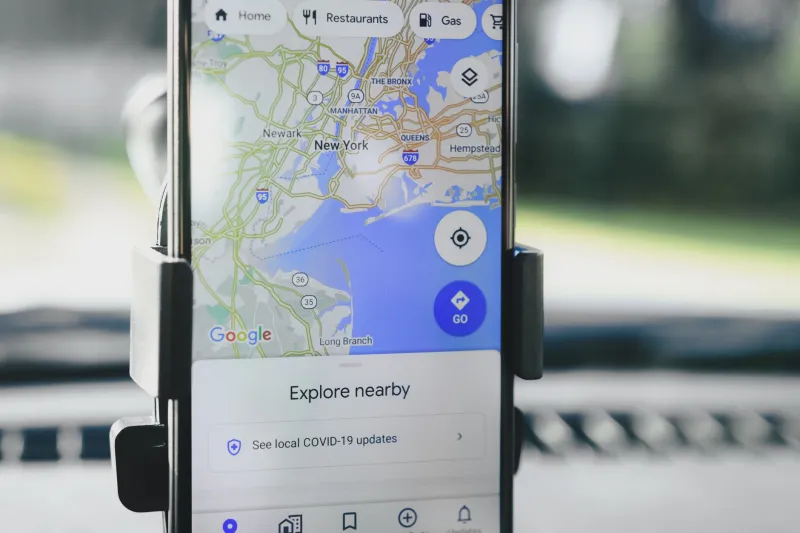
Open any delivery app on a Friday night and it feels like abundance. Dozens of restaurants, every cuisine imaginable, prices ranging from budget to borderline ridiculous. But here's the thing: the person living three miles from you — maybe across a main road, maybe just one neighborhood over — might be staring at a completely different screen. More options, better restaurants, faster delivery times. Same city. Same app. Wildly different experience.
This isn't a glitch. It's a design choice. And once you understand how it works, you'll never look at your delivery app the same way.
The Invisible Fence Around Your Dinner
Delivery apps don't actually show you every restaurant willing to deliver. They show you every restaurant willing to deliver to you — which is a much shorter list than it sounds.
The way these platforms carve up cities comes down to logistics zones, sometimes called delivery polygons. Each restaurant sets a radius — or the platform sets one for them — and that radius is based on a mix of factors: driver availability, estimated travel time, order volume in the area, and frankly, how profitable your neighborhood has been historically. If you live in an area where drivers don't frequently operate, or where past order density has been low, your accessible zone shrinks. Restaurants that would happily send food your way simply never appear on your screen because the algorithm has quietly decided the math doesn't work.
The result is a kind of invisible fence. You're technically in a city full of options, but the app has pre-filtered everything down to whatever fits neatly inside your delivery bubble.
Why Some Neighborhoods Win the Algorithm
Delivery apps are, at their core, logistics operations. They need drivers clustered in areas where orders are dense enough to make constant movement worthwhile. That means high-traffic urban cores — downtown districts, college neighborhoods, areas with high apartment density — tend to get disproportionate coverage. Drivers hang around because orders keep coming. Restaurants expand their delivery zones because they know drivers will be there. It becomes self-reinforcing.
Restaurant partnerships play a huge role too. Platforms actively recruit anchor restaurants in certain areas, sometimes offering reduced commission rates or promotional placement to get them onboard. Once a few popular spots sign up in a neighborhood, it attracts more drivers, which attracts more restaurants, which improves service times, which drives more orders. Meanwhile, neighborhoods that didn't hit that initial critical mass just... stagnate. The options stay thin. The delivery times stay long. Users get frustrated and order less, which only confirms the algorithm's assumption that the area isn't worth investing in.
This dynamic hits certain communities harder than others. Lower-income neighborhoods, areas with lower smartphone penetration historically, and communities that were simply slower to get picked up by early platform expansion often find themselves on the losing end of this equation — even when there are perfectly good restaurants nearby that would love the business.
The Ghost Kitchen Variable
Here's where it gets a little more complicated. Some of what looks like a full restaurant lineup in well-served areas isn't really a diverse selection at all. Ghost kitchens — commercial cooking spaces running multiple virtual brands out of a single location — have clustered heavily in logistics-friendly zones. One kitchen might power eight different "restaurants" on your app, all with different names and menus, all coming from the same address.
For users in those zones, it creates the illusion of variety. For users outside those zones, it means the coverage gap is even wider than it looks, because the apparent density of options in other areas is partly artificial. You're not just getting fewer restaurants — you're getting fewer actual kitchens.
How to Work Around Your App's Artificial Limits
The good news: the fence isn't locked. There are real, practical ways to find food beyond what your default app radius is showing you.
Change your delivery address slightly. This sounds almost too simple, but it works. Try entering an address a few blocks in a different direction — toward a busier commercial corridor, or closer to a neighborhood with higher restaurant density. You might unlock a completely different set of options, some of which will still realistically deliver to where you actually are.
Use multiple apps and compare. DoorDash, Uber Eats, Grubhub, and Instacart (for some restaurant delivery) all have different restaurant partnerships and different logistics networks. A spot that doesn't appear on one platform might be front and center on another. Running a quick side-by-side check before you commit to an order takes two minutes and can completely change what's available to you.
Look for pickup options. A lot of apps now let you filter for pickup-only orders, which removes the delivery radius entirely. If you've got a car or you're willing to walk a little, this opens up a much broader range of restaurants. You also dodge delivery fees and the food-quality hit that comes with transit time, which is a genuine bonus.
Search the restaurant directly. Many local spots have their own online ordering systems — sometimes better-priced than the apps — that you'd never find by browsing your delivery feed. A quick Google search for "[restaurant name] order online" often turns up a direct option. Platforms like Toast and Square have made it easier for independent restaurants to run their own ordering pages, and those restaurants actively prefer when you use them.
Ask locals, not algorithms. Reddit, Nextdoor, local Facebook groups, and even Instagram geotags are genuinely underrated resources for finding neighborhood spots that aren't well-represented on delivery apps. People in your area know what's good and what delivers. The algorithm doesn't have that knowledge — it just has data.
The Bigger Picture
Delivery apps have done something genuinely useful: they've made it easier to find and order food, especially in areas with strong coverage. But the coverage itself isn't neutral. It reflects business decisions, historical data, and market logic that doesn't always align with where good food actually exists or who deserves access to it.
Understanding that your app's restaurant list is a curated, geography-dependent subset — not a complete picture — is the first step to eating better on any given night. The food you're looking for is probably out there. Your zip code just might need a little help getting out of the way.