The Local Spots Your Delivery App Is Hiding From You (And How to Find Them Anyway)
The Map Has Gaps
Open any major delivery app right now. Scroll through the options in your area. Looks pretty solid, right? Dozens of choices, plenty of variety, familiar names mixed in with some local flavor.
Now think about that taco spot two blocks over with the line out the door every Friday. Or the family-run Vietnamese place your coworker won't stop talking about. Or the Jamaican joint that's been feeding the neighborhood for fifteen years.
Not there. Not even close.
This isn't an accident. It's the result of a set of business decisions — made mostly by the platforms, partly by restaurant owners — that quietly shapes what you think is available to you. And once you understand how it works, you'll never look at your delivery feed the same way again.
Why Good Restaurants Go Invisible
Let's start with the money. The big delivery platforms — DoorDash, Uber Eats, Grubhub — charge restaurants a commission on every order. Depending on the deal, that cut typically lands somewhere between 15% and 30% of the order total. For a restaurant already operating on thin margins (and in the food industry, margins are almost always thin), handing over nearly a third of every sale isn't just uncomfortable. For many, it's genuinely not viable.
A small taqueria doing $800 in a busy lunch shift can't afford to give $200 of that to an app. Especially when they'd also need to adjust their menu pricing to compensate, which risks alienating the loyal regulars who walk in and pay full price.
There's also the listing fee and onboarding process to consider. Getting onto a major platform isn't as simple as signing up. There are contracts to negotiate, tablet systems to install, staff to train on new workflows, and often a required photo shoot for menu items. For a two-person operation where the owner is also the head cook and the bookkeeper, that's a significant time investment on top of everything else.
And then there's the visibility problem even for those who do sign up. Platforms use algorithms to determine which restaurants show up first in your feed. Restaurants that pay for premium placement, have higher order volumes, or maintain strong ratings get surfaced more often. A newer or smaller spot can technically be listed and still be functionally invisible because it's buried on page six.
The Neighborhood Gems That Opt Out Entirely
Some restaurants make a deliberate choice to stay off the apps altogether. Talk to enough independent restaurant owners and you'll hear a consistent theme: the platforms take too much, offer too little control, and create customer service headaches that land back on the restaurant even when the problem was a delivery driver.
A bad review because the food arrived cold? That goes on the restaurant's profile, even if the driver sat in a parking lot for twenty minutes. A wrong-item complaint? Same deal. The restaurant absorbs the reputational hit for problems it didn't cause.
So plenty of great spots have made a calculated decision to handle delivery themselves — or skip it entirely and focus on dine-in and takeout. Which means if you're only looking through an app, you're never going to find them.
How to Discover What the Apps Are Missing
Here's where things get useful. Because the food is still out there. You just have to go looking in different places.
Start with Google Maps and Yelp, not the apps. These platforms have much broader restaurant coverage because listing there is free. Search your neighborhood, filter by cuisine, and you'll start seeing names that never appear in your delivery feed. Many of these spots have phone numbers right on their listing — call ahead, ask if they do takeout or delivery, and you might be surprised.
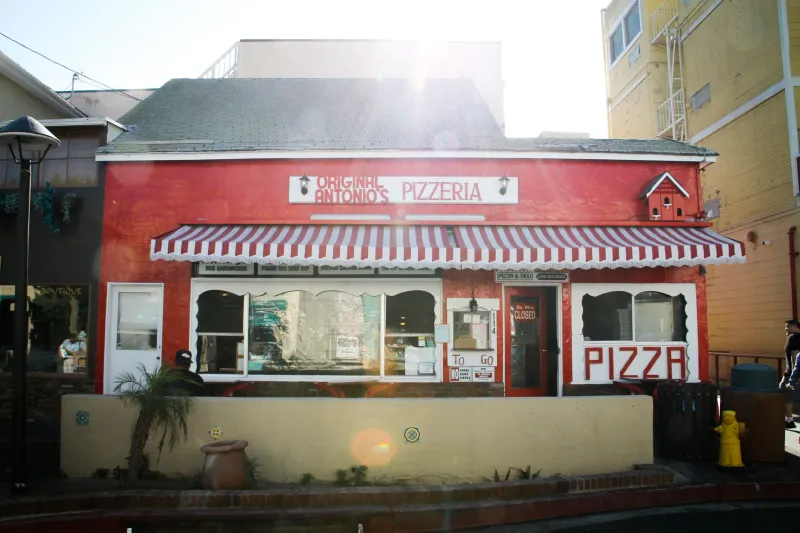
Check if they have their own ordering system. A growing number of independent restaurants use platforms like Toast, Square, or Slice (especially for pizza spots) to handle online orders directly. These systems charge the restaurant a much smaller fee, which means the restaurant keeps more money and you often pay less than you would through a third-party app. Look for an "Order Online" button on their website or Google listing.
Follow them on Instagram. This sounds obvious but it's genuinely underused. A huge number of small restaurants use Instagram as their primary communication channel — posting daily specials, announcing new menu items, and sometimes taking orders directly through DMs. If there's a spot you've been curious about, follow them. You'll learn more about how they operate in a week of posts than you would from any app listing.
Ask the neighborhood. Nextdoor, local Facebook groups, and Reddit's city-specific communities are goldmines for exactly this kind of information. Drop a post asking for hidden gem recommendations in your area and you'll get responses from people who actually live there and eat there regularly. Real recommendations from real neighbors beat algorithmic suggestions every time.
Use Delivery.com or ChowNow. These platforms tend to have a different roster of restaurants than the big three, often with better representation of independent spots. ChowNow in particular positions itself as the restaurant-friendly alternative — lower commissions, more control for owners — which means some of the spots that opted out of DoorDash or Uber Eats are listed there instead.
What You're Actually Supporting When You Go Direct
Beyond the practical upside of finding better food, there's a real impact to how you spend your delivery dollars. When you order through a major app, a significant chunk of your money leaves the local economy entirely. When you order directly — through a restaurant's own website, by phone, or through a lower-fee platform — more of that money stays with the people who made your food.
That's not a lecture. It's just context. The taco place that's been in your neighborhood for a decade isn't invisible because the food isn't good. It's invisible because the economics of the apps don't work for them. Going around the app to find them isn't some heroic act — it's just smarter eating.
Your Delivery Feed Is a Curated Shortlist, Not the Whole Story
The next time you open a delivery app and feel like there's nothing interesting to order, remember: what you're seeing is a filtered, fee-driven, algorithm-shaped slice of what's actually available in your city. The full picture is way bigger.
The best meal in your neighborhood might not have a slick app listing or a professional food photo. It might just have a handwritten sign, a loyal following, and a phone number. And honestly? That's usually a pretty good sign you're onto something worth finding.