Why Some Restaurants Own the Dinner Rush — And Others Completely Unravel
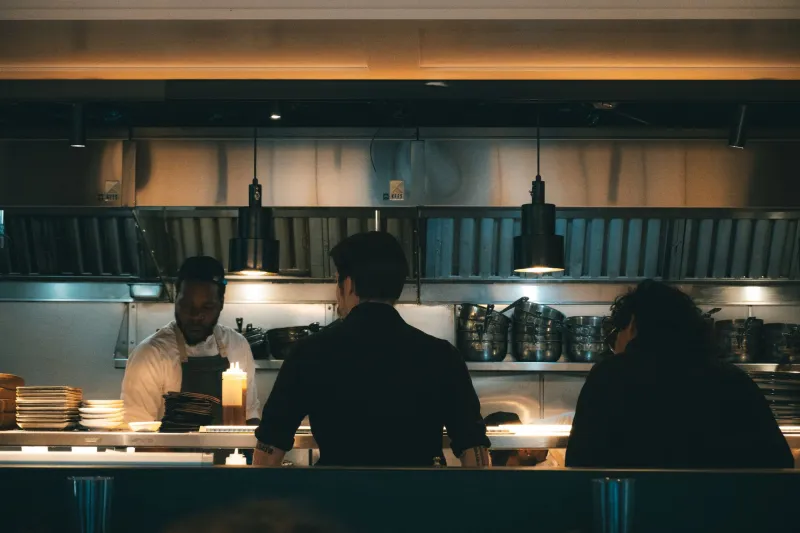
It's 6:30 on a Friday night. Half of America just got home from work, nobody wants to cook, and every delivery app in the country is lighting up like a pinball machine. For some restaurants, this is their moment. Orders fly out on time, ratings stay high, and drivers are in and out in under five minutes. For others, it's a slow-motion collapse — tickets piling up, kitchens falling behind, and your pad thai sitting under a heat lamp going on forty minutes.
So what's actually going on? Why does one restaurant handle a flood of orders like it was born for it, while the place down the street implodes every single Friday? We dug into the operations side of the food delivery world to find out — and what we learned says a lot about where you should (and shouldn't) be placing your order when you're hungry and in a hurry.
It Starts Way Before the Rush
The restaurants that consistently crush peak hours aren't winging it when 6 p.m. rolls around. They've done the prep work hours — sometimes days — in advance.
Operations managers at high-volume delivery-focused restaurants will tell you that the rush is won or lost in the afternoon. Proteins are portioned. Sauces are prepped in bulk. Stations are stocked and organized so that line cooks aren't hunting for ingredients mid-ticket. It sounds basic, but it's the kind of discipline that separates a restaurant running 200 delivery orders a night smoothly from one that starts drowning at order number 40.
One operations manager at a multi-location fast-casual chain in Chicago put it plainly: "We treat the dinner rush like a sporting event. You prep, you warm up, and you know your role before the whistle blows. If you're figuring out your mise en place at 6 p.m., you've already lost."
Staffing Is Everything — And Most Places Get It Wrong
Here's a dirty little secret about restaurant delivery operations: a lot of places staff for their dining room and then just hope the delivery orders work themselves out. They don't.
The restaurants that handle peak demand well almost always have dedicated delivery-side staff during rush hours. That might mean a dedicated expo — someone whose entire job is to bag orders, check them for accuracy, and hand them off to drivers — or it might mean a separate prep station that exists purely to handle off-premise orders. Either way, the point is the same: delivery is treated as its own service channel, not an afterthought tacked onto the dine-in operation.
When restaurants try to run delivery orders through the same workflow as table service, things break down fast. A server running food to a table doesn't have time to also bag a DoorDash order correctly. A line cook managing five dine-in tickets isn't going to prioritize making sure your delivery burger is wrapped tight enough to survive a ten-minute car ride.
The Tech Stack Actually Matters
Not all restaurants are using the same tools, and the gap in technology choices has a real impact on how fast (and accurately) your order gets made.
Smarter operators use tablet consolidation software — platforms that pull orders from multiple delivery apps (Uber Eats, DoorDash, Grubhub, etc.) into a single screen that feeds directly into their kitchen display system. This eliminates the chaos of three different tablets all dinging at once and staff manually punching orders into the POS. Less manual entry means fewer errors. Fewer errors means your order is right the first time.
Restaurants that are still running multiple tablets separately — or worse, handwriting tickets from a tablet onto paper — are working against themselves. During a rush, every extra step is a chance for something to go wrong.
Beyond consolidation, the smarter restaurants also use throttling. When order volume hits a certain threshold, the system automatically pauses new incoming orders or extends quoted wait times rather than letting the kitchen get buried. It might mean you see a longer estimated delivery time on your app, but it also means that time estimate is actually accurate — which is a lot better than a falsely optimistic 25 minutes that turns into 55.
Menu Design Is a Hidden Variable
This one surprises a lot of people: the restaurants that perform best during delivery rushes often have menus that were deliberately engineered for high-volume execution.
That doesn't mean the food is boring — it means the menu was designed with kitchen flow in mind. Fewer items that require long cook times. More dishes that share core components. Less reliance on made-to-order elements that slow everything down. A taco spot with eight proteins and three base builds can pump out orders at a completely different pace than a full-service restaurant trying to replicate its entire dine-in menu for delivery.
Some of the most delivery-efficient restaurants in the country — including a lot of the ghost kitchen concepts you've probably already ordered from — were built from scratch with this logic. They're not adapting a dining room menu for delivery. They designed the menu around delivery from day one.
What This Means for You as a Customer
All of this behind-the-scenes stuff has a very practical implication: not every restaurant on your delivery app is equally capable of handling your order on a Friday night, and knowing the difference can save you a lot of frustration.
A few things worth looking at before you order during peak hours:
Check recent reviews, not just the overall rating. A restaurant with a 4.6 overall rating but a string of recent comments about late deliveries and cold food is probably struggling with volume right now. Ratings lag behind reality. Recent reviews don't.
Look at estimated wait times critically. If a restaurant is showing 15–20 minutes at 6:45 p.m. on a Saturday, that's either a sign they've got their operation dialed in, or a sign they haven't updated their settings and you're about to wait much longer. Cross-check with reviews.
Simpler menus often mean faster, more accurate orders. That doesn't mean you can't order the elaborate dish — but if you're in a hurry, a restaurant with a tight, focused menu is statistically more likely to get your food out fast and right.
Favor places that specialize in delivery. Ghost kitchens and virtual brands get a mixed reputation, but many of them were purpose-built to handle exactly this kind of volume. If the concept was designed for off-premise ordering, it's probably better at it than a traditional restaurant trying to do both at once.
The Bottom Line
The dinner rush is a stress test, and not every restaurant passes it. The ones that do have usually made deliberate choices — about staffing, technology, menu design, and prep — that most people never think about when they're scrolling through app options at 6:30 p.m.
Next time you're placing an order during peak hours, it's worth taking thirty seconds to think about whether the place you're ordering from was actually built for this moment. Your food — and your patience — will thank you.