Terminal Taste Test: How to Eat Surprisingly Well at the Airport Without Blowing Your Whole Budget
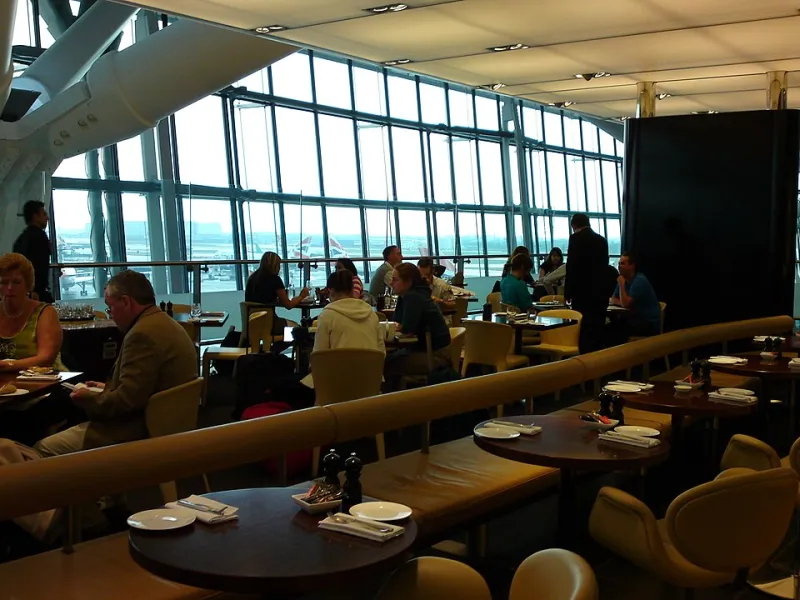
Photo: Karl Baron, CC BY 2.0, via Wikimedia Commons
Let's be honest. Most of us have stood in the middle of a terminal, 45 minutes before boarding, staring down a sad row of chain restaurants and overlit grab-and-go cases, and just... given up. You grab the $18 turkey sandwich, the $6 bag of pretzels, and a water bottle that costs more than your last grocery store haul. You eat it at the gate. It's fine. It's always fine.
But here's the thing — airport dining in the US has quietly had a glow-up, and the travelers who know how to work the system are eating significantly better than everyone else in the terminal. The gap between a terrible airport meal and a genuinely great one often comes down to three things: timing, research, and knowing which airports are actually worth your attention.
The Airports That Are Actually Worth Getting Excited About
Not all airports are created equal. Some are still culinary wastelands. Others have quietly become destinations in their own right.
Hartsfield-Jackson in Atlanta has a location of One Flew South, a full-service Asian fusion restaurant that regularly makes lists of the best airport restaurants in the country — and it's inside the terminal, past security. Denver International has Elway's, a steakhouse concept from NFL legend John Elway that legitimately holds up against most Denver restaurants outside the airport. Portland International (PDX) has long been celebrated for featuring local Oregon food concepts, including Raven & Rose and local craft beer options that reflect the actual food culture of the city.
Seattle-Tacoma, San Francisco, and even Newark have invested heavily in local and regional food partnerships over the past decade. Before your next trip, it's worth spending five minutes Googling the specific terminal you'll be departing from — not just the airport generally, because terminals can vary wildly.
Do Your Homework Before You Leave the House
This is where the strategy starts, and it starts at home, not at the gate.
Most major airports publish full dining directories on their websites, broken down by terminal and concourse. Tools like GateGuru (available as an app) let you filter airport restaurants by cuisine type, hours, and even wait time estimates. Some airports have integrated with platforms that let you pre-order food for pickup — meaning you can skip the line entirely and walk straight to your meal.
If you're a frequent flyer with lounge access through a credit card like the Chase Sapphire Reserve or an Amex Platinum, that changes your calculus even further. Lounges at major hubs have elevated their food offerings significantly. The Centurion Lounge at Dallas Fort Worth, for example, rotates menus developed by local chefs and has drawn genuine praise from food writers. That $550 annual fee suddenly looks different when it includes a legitimately good meal on a Tuesday layover.
Even without lounge access, spending 10 minutes on research before your trip can mean the difference between a forgettable wrap and a bowl of ramen from a local chef's airport outpost.
The Math Behind Paying More (and When It Actually Makes Sense)
Yes, airport food is more expensive. That's not going to change. Rent is higher, logistics are harder, labor costs more, and the airport authority takes a cut. But the premium you pay doesn't always mean you're getting less value — it depends entirely on what you're comparing it to.
Consider this: a fast food drive-thru meal grabbed in a rush on the way to the airport often costs $12 to $15 anyway, especially with current prices. You eat it in the car, half-distracted, probably before you've even hit the highway. Compare that to a $20 meal at a quality airport restaurant where you sit down, decompress before a flight, and actually eat something you chose intentionally. The math isn't as brutal as it first appears.
The real value trap at airports isn't the sit-down restaurants — it's the grab-and-go cases. Pre-packaged sandwiches, sad salads in plastic containers, and trail mix bags marked up 300% are where airports really get you. If you're going to spend money in a terminal, spend it on something made fresh, preferably by a concept that has a story behind it.
Timing Is Everything
Airport restaurants operate on a brutal schedule, and knowing when to eat can dramatically affect your experience.
If you're flying out in the early morning, most full-service restaurants won't be open yet — but many airports have solid breakfast-specific spots worth seeking out. Flying through Chicago O'Hare or Minneapolis–Saint Paul in the mid-morning? Both have options that go well beyond the standard egg sandwich.
For midday and afternoon flights, you've got the most options and the most competition for seats. Build in 20 extra minutes if you want to sit down at an actual restaurant. Arrive at the gate fed, not frantic.
Late-night travelers often face the worst selection, since many full-service spots close by 9 or 10 p.m. In those cases, knowing which quick-service spots stay open late — and which ones are actually decent — is the difference between a good travel day and a hungry, miserable one.
The Hidden Move: Eating Before Security
Here's a tip that doesn't get enough attention: the area before security at many airports has restaurants and markets that serve the same quality food at significantly lower prices, since they're not subject to the same terminal lease structure.
If you've got the time and you're traveling light, it's worth checking what's available in the public area of your departure airport. In cities with strong food cultures — Portland, Austin, New York — the options just outside security can be genuinely excellent.
Of course, this only works if your schedule allows it. If you're rushing to make a connection, this isn't your move. But for the traveler with a 90-minute buffer? It's worth considering.
Eat We Go's Bottom Line
Airport food doesn't have to be a punishment. The travelers who eat well on the road are the ones who treat the terminal like any other neighborhood — worth exploring, worth researching, and worth a little intentionality. Use the tools available to you, know your airport, and stop defaulting to whatever's closest to your gate. Great food is out there, even at 35,000 feet of altitude and one TSA checkpoint away.